
From Pay Raise to Paycheck‑to‑Paycheck – The Hidden Cost of Lifestyle Inflation

By David Samuel
Everyday Finance Coach
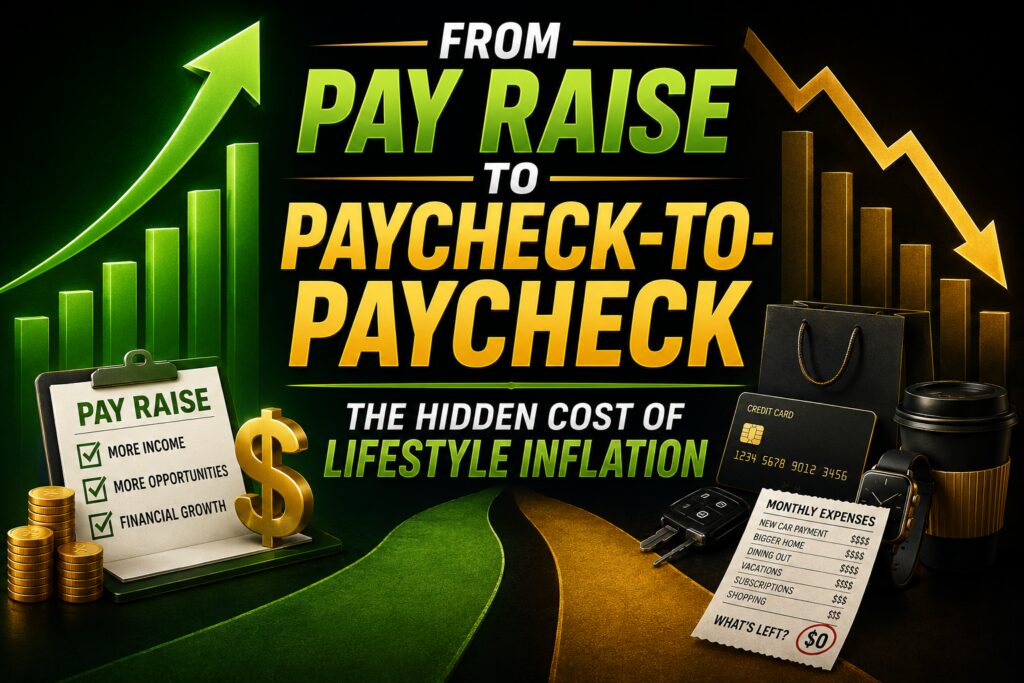
Lifestyle inflation is the quiet habit of upgrading your lifestyle every time your income rises—and over years, it can completely wipe out the wealth your higher earnings should have created. If you don’t actively guard against it, you can end up earning more but still living paycheck to paycheck, with little to show in savings or investments.
What lifestyle inflation is
Lifestyle inflation (or lifestyle creep) is the tendency for your spending to increase in lockstep with your income. Former luxuries slowly become “needs,” and your baseline cost of living rises without you consciously deciding it.
Instead of a raise creating surplus cash to save or invest, the extra money quietly gets absorbed into upgrades—better housing, more dining out, nicer car, premium subscriptions. Because this happens gradually, many people don’t realize they’re trapped until they notice that every pay raise still leaves them short at month-end.
Why it’s a deadly wealth killer
The biggest damage of lifestyle inflation is opportunity cost: every dollar that goes to lifestyle upgrades is a dollar that isn’t compounding for your future. Over a decade, redirecting even a few hundred dollars a month from investing to lifestyle can mean tens of thousands in lost wealth.
Lifestyle inflation also keeps you vulnerable: higher fixed expenses make it harder to save for retirement, build an emergency fund, or weather job loss or market shocks. Many high earners discover that despite impressive salaries, they’re one missed paycheck away from financial stress because their lifestyle has expanded to match their income.
How lifestyle inflation creeps in
Lifestyle inflation typically follows predictable life and career milestones: promotions, bonuses, new jobs, graduations, or moving to higher‑income cities. Each step up becomes a psychological trigger to “reward yourself” with bigger housing, nicer travel, or more frequent treats.
Social comparison intensifies this creep; trying to keep up with colleagues’ cars, trips, and gadgets pushes discretionary spending higher. Over time, recurring upgrades—gym memberships, streaming bundles, meal deliveries, brand-name everything—ratchet your baseline spending to a level that felt extravagant just a few years earlier.
Warning signs to watch for
You may be caught in lifestyle inflation if your savings rate hasn’t improved despite multiple raises, or if you still feel “broke” on a much bigger income. Reliance on credit cards to bridge the gap between paychecks is another red flag that your lifestyle has outrun your means.
Another sign: items you once treated as luxuries—upscale dining, frequent travel, premium brands—now feel non‑negotiable monthly expenses. If you struggle to downsize or cut subscriptions without feeling deprived, your lifestyle baseline has likely crept up significantly.
Practical ways to fight back
The first defense is awareness: track where your money goes and separate genuine needs from wants. When you get a raise, deliberately decide how much will go to savings and investing before committing to any lifestyle upgrades. For example, you could predetermine your “windfall allocation” to be 50% investment, 30% debt paydown, and 20% joy. This allocation should be applied not only to raises, but as well to any one-time windfall, such as a bonus, a tax refund, a cash gift, or side-hustle earnings.
Automating your wealth-building is powerful: set automatic transfers to savings, retirement, and investment accounts so money is allocated before you can spend it. See: Paycheck Power: Automations That Quietly Grow Your Savings in the Background. Complement this with simple friction tactics—waiting 24–48 hours before non‑essential purchases, keeping a “buy later” list, and routinely reviewing recurring subscriptions to cut dead weight. See: The Subscription Audit: Quietly Free Up Cash Without Feeling Deprived
Turning raises into real wealth
A healthier approach is to let your wealth, not your lifestyle, inflate first. Aim to increase your savings and investment rate every time your income rises. Even keeping your core lifestyle stable for a few years while your earnings grow can dramatically accelerate progress toward retirement, debt freedom, or major goals.
Living slightly below your means—while still allowing intentional, budgeted treats—creates resilience and optionality: career flexibility, the ability to invest in opportunities, and far less stress when life throws curveballs. Lifestyle inflation will always whisper, “You deserve it”; your job is to make sure your future self gets just as much of what you deserve as your present self.
If you think about your last raise or major income jump, how much of it did you deliberately allocate to saving and investing versus letting it flow into lifestyle upgrades?
If you’re ready to make progress in your effort to take control of your finances, this is exactly the kind of work done with my coaching clients every day—clarifying priorities, creating a practical plan, and following through on it. If you’d like support with your own situation, you’re welcome to reach out anytime right here, or by email at david@everydayfinancecoach.com